
19.12.2025 H₂Mare
Offshore trial successfully completed
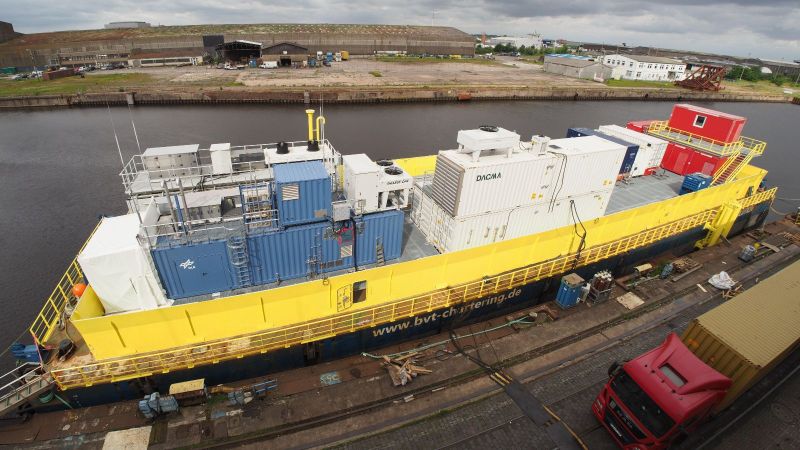
The H2Mare PtX-Wind project has successfully demonstrated the world’s first production of synthetic fuels on a floating platform. The pilot plant was constructed in the port of Bremerhaven and subsequently deployed in the North Sea off the coast of Heligoland. The platform operated round the clock for over two weeks and has now provided evidence that Power-to-X processes can operate reliably even under harsh offshore conditions.
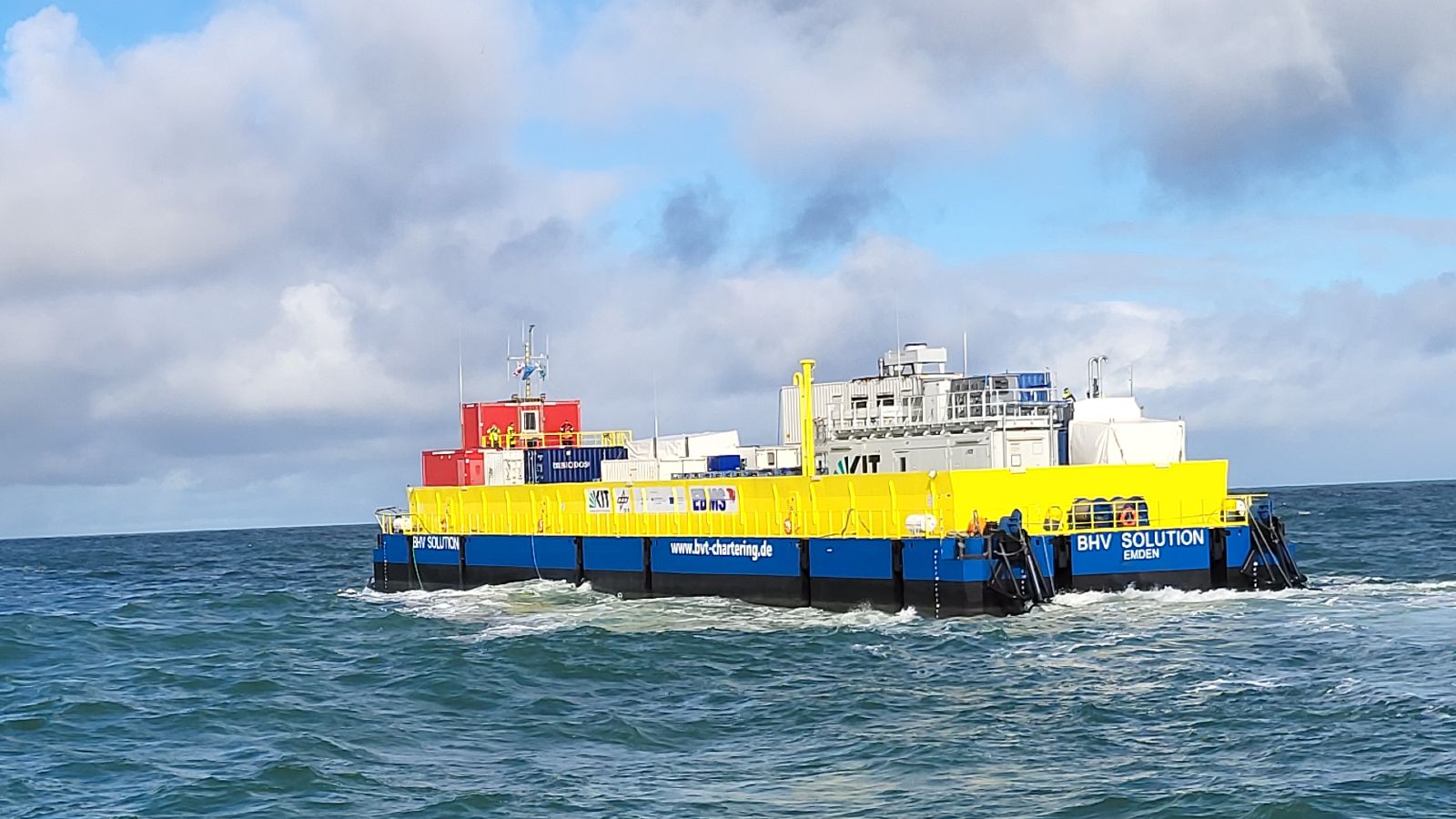
The entire process chain on board
The high-purity water required for electrolysis was treated on site using a desalination plant. CO2 is required to ultimately produce e-fuels from the hydrogen generated in the electrolysis process. This was also extracted directly from the sea air on the floating platform using a direct air capture system.
Double world premiere
It is not only the floating platform itself that is a world first. The centrepiece of the demonstration was the combination of high-temperature solid oxide cell electrolysis (SOC electrolysis) and Fischer-Tropsch synthesis. For the first time worldwide, hydrogen was produced under pressure at 20 bar using SOC (solid oxide) electrolysis.
SOC electrolysis does not usually operate under pressure. However, increased pressure boosts the efficiency of the electrolysis, which has benefits for energy efficiency. Furthermore, it facilitates subsequent transport and storage, as hydrogen must be compressed for these purposes anyway. Another major advantage in the synthesis chain for e-fuels is that the hydrogen produced can be used directly in the subsequent Fischer-Tropsch synthesis without the need for additional compression.
Challenges on the high seas
The external factors on the high seas that affect the process chain and the smooth running of operations should not be underestimated. Repeated power cuts, high swells, severe storm warnings and researchers suffering from seasickness posed major challenges for the equipment and the tests. Despite these difficult conditions, all process stages were able to operate continuously throughout the two-week campaign. This was made possible in particular by the collaboration with experienced seafaring personnel.
The results achieved provide important insights for the development of larger PtX platforms and pave the way for producing CO2-neutral synthetic fuel at sea.