
09.07.2025 H₂Mare
World premiere! Floating test platform for Power-to-X production launched
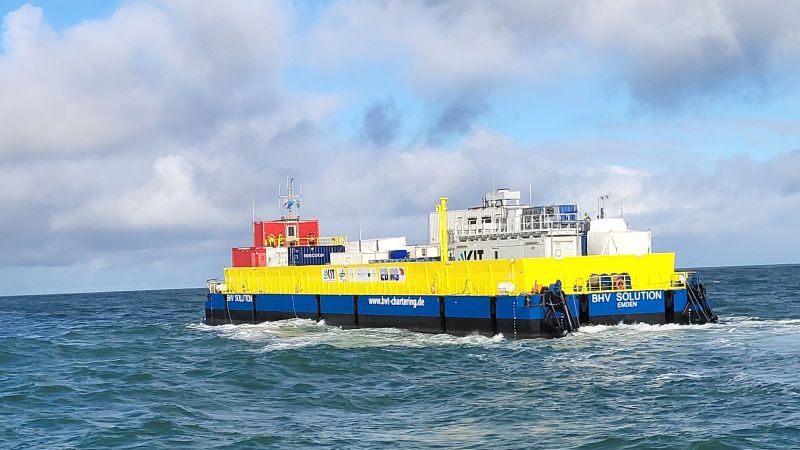
The flagship hydrogen project H2Mare has commissioned the world’s first floating test platform in Bremerhaven to demonstrate a complete Power-to-X process chain for sustainable fuels. On the platform, e-fuels are produced from green hydrogen via Fischer-Tropsch synthesis under real-world conditions on the high seas. The research conducted on the platform provides important insights for the development of larger Power-to-X plants. In future, these are intended to produce and utilize green hydrogen directly at offshore wind farms – entirely without a grid connection.
Seaworthy technology: what the platform comprises
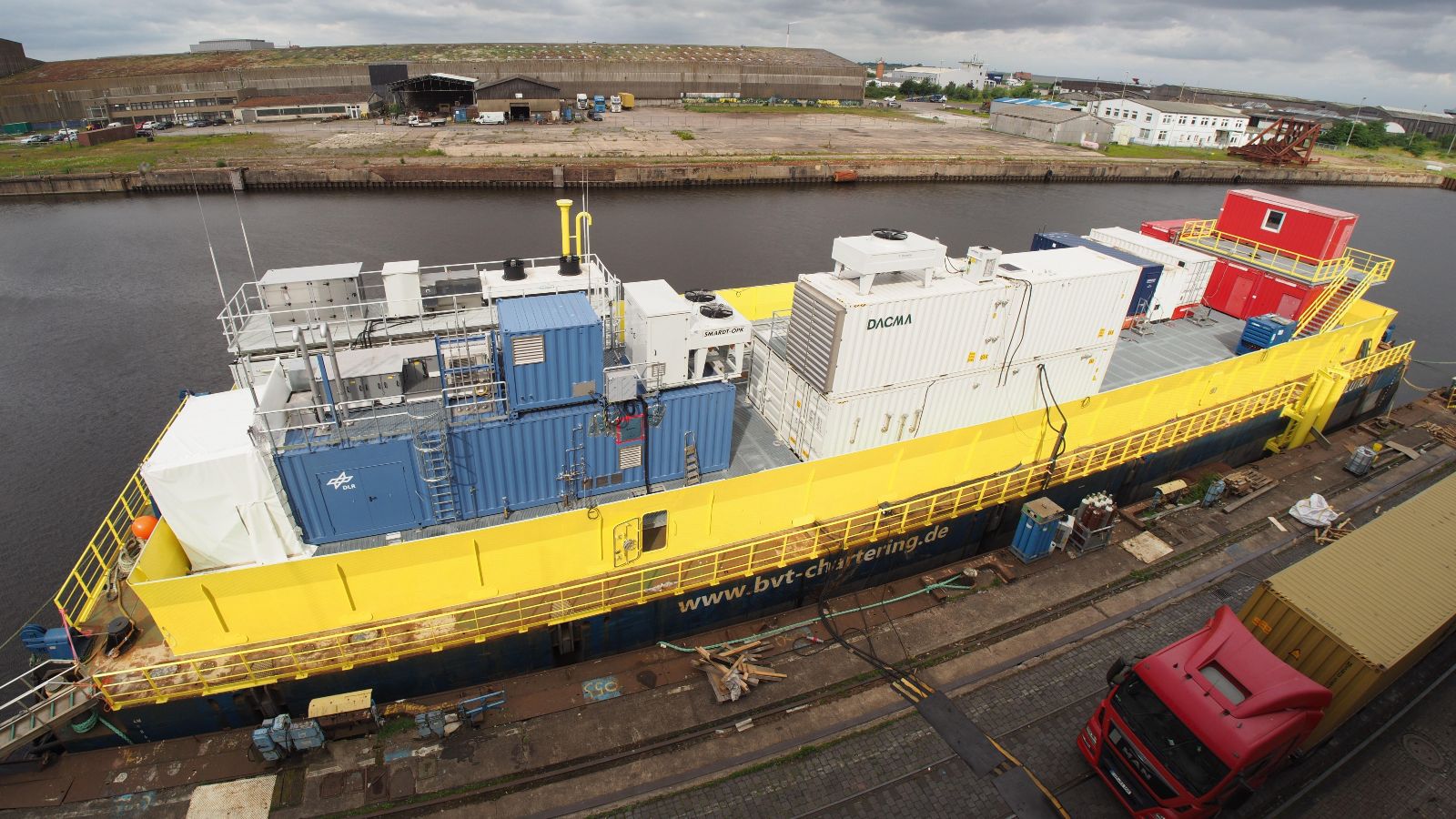
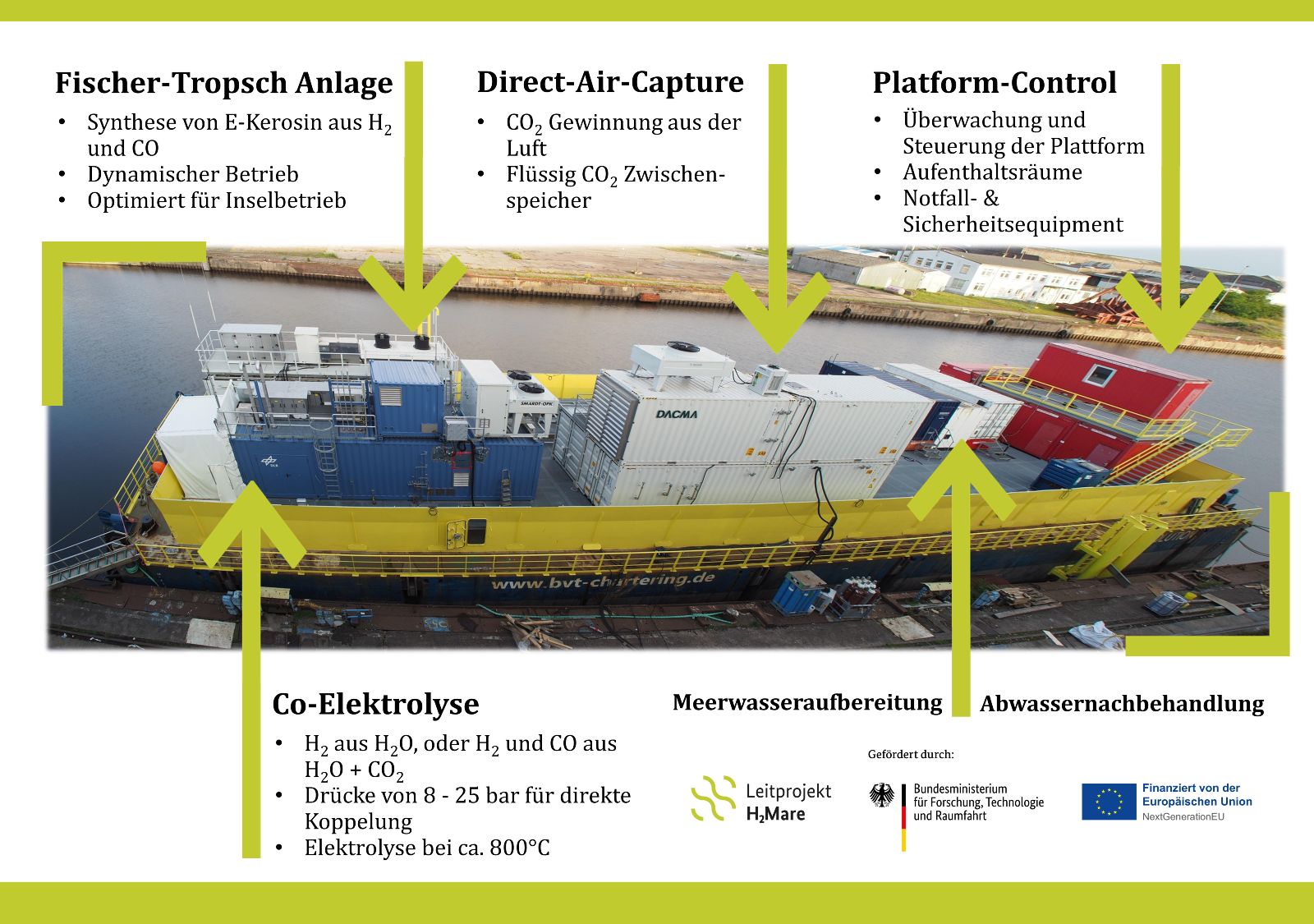
The 60 x 15-metre test platform was developed by the H2Mare project partners: the Karlsruhe Institute of Technology (KIT), the Institute of Technical Thermodynamics at the German Aerospace Centre (DLR) and the Technical University of Berlin. It is designed using a modular container construction method to ensure reliable operation even in rough seas and strong winds.
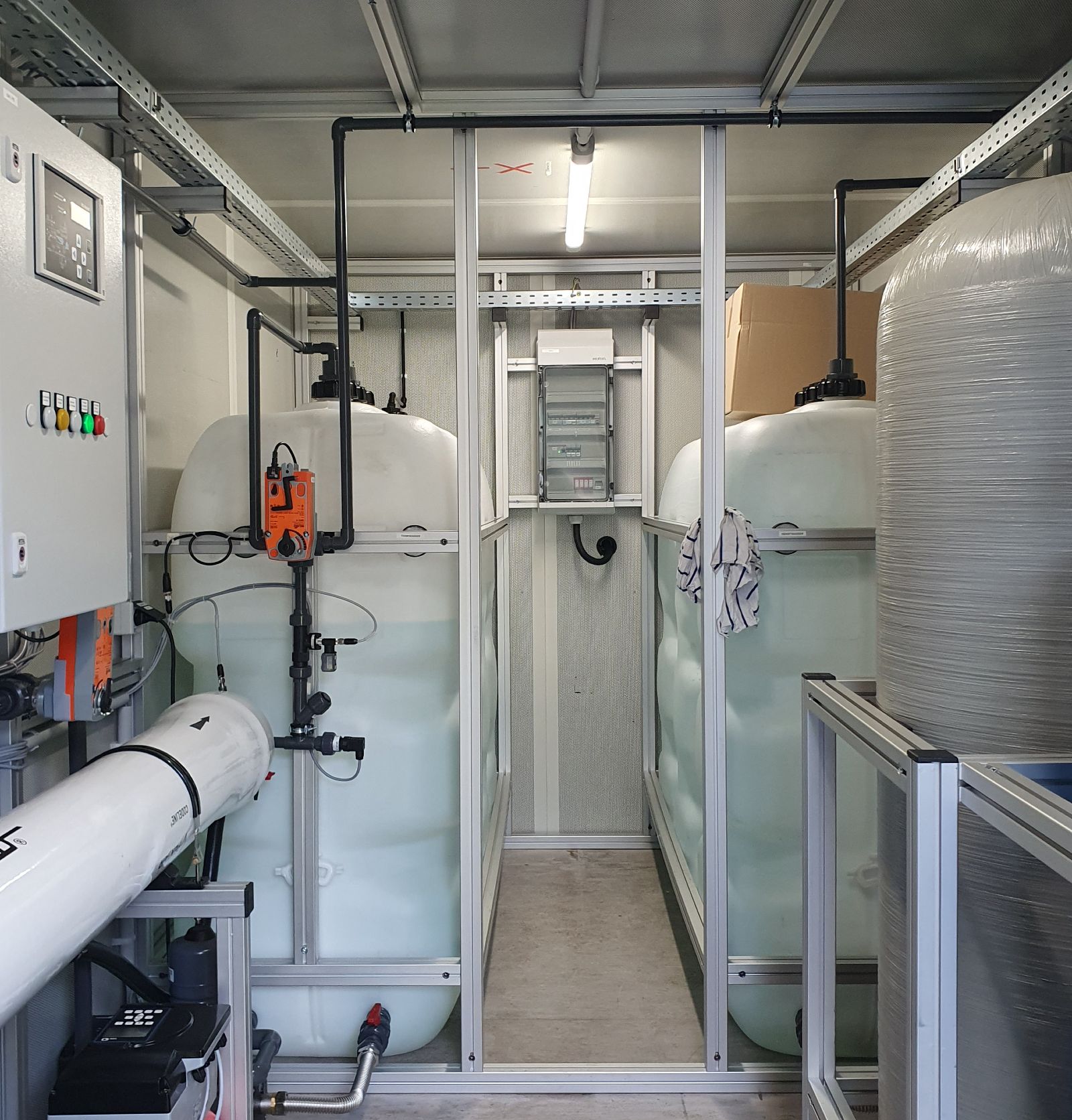
After around seven months of construction, the platform is now ready to demonstrate a power-to-X synthesis route – specifically the Fischer-Tropsch synthesis – for the production of sustainable kerosene and diesel on the high seas. In the first step, green hydrogen is produced and processed directly using desalinated seawater and carbon dioxide (CO2). The H2Mare test platform therefore features its own direct air capture system for extracting CO2 from the ambient air, a seawater desalination plant and a high-temperature electrolysis system for producing synthesis gas.
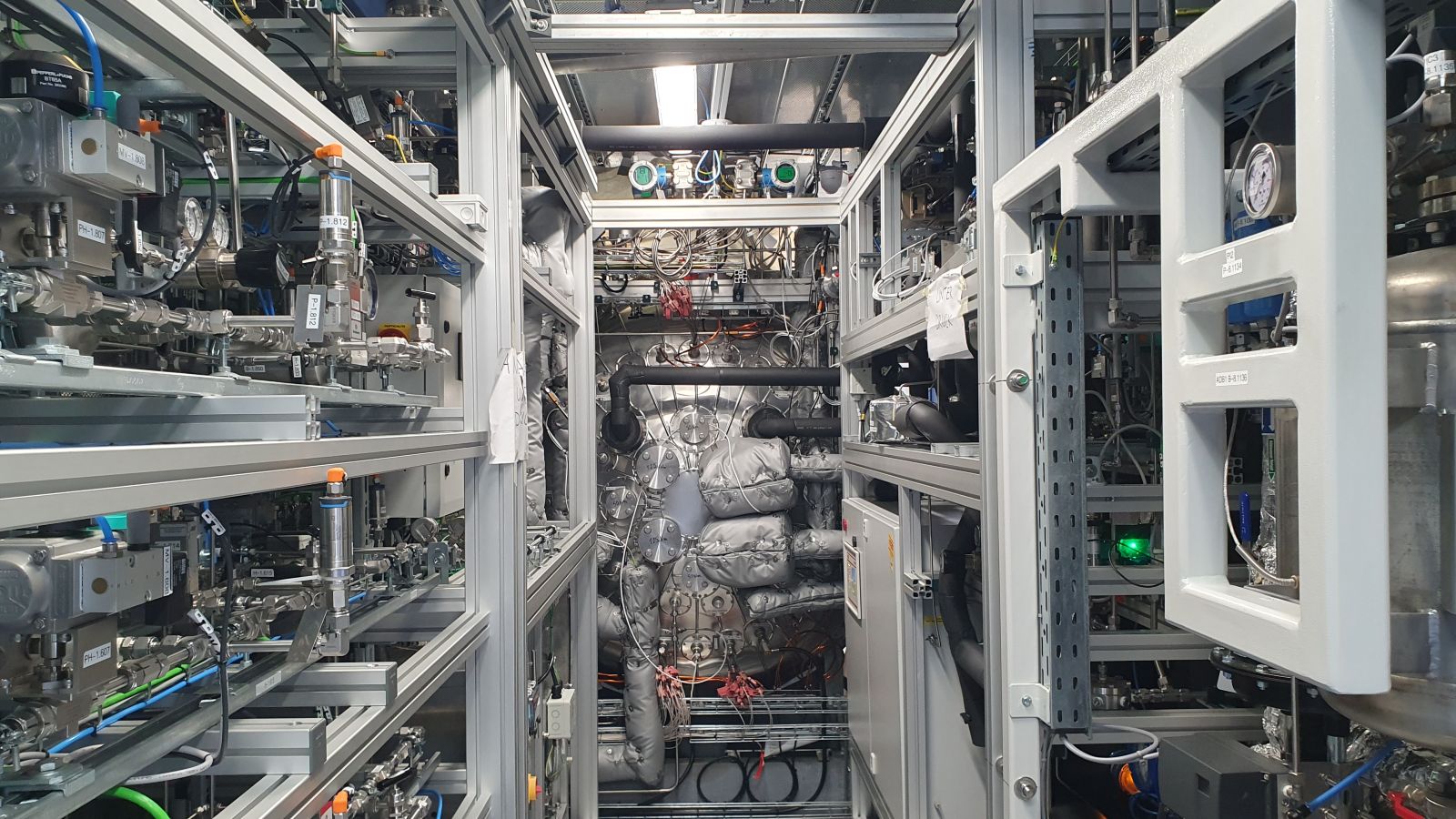
The synthesis gas serves as the feedstock for the Fischer-Tropsch process, in which green hydrogen and CO2 are converted into e-fuels. The design enables dynamic, off-grid operation of the entire process chain, tailored to the availability of renewable electricity from offshore wind power.
Offshore deployment from July 2025
The platform will be tested from July 2025, initially in the port of Bremerhaven and subsequently on the open sea off Heligoland.
“We wanted to run through the entire planning process – from approval and construction to the operation of the plant – in a real-world scenario, so that we could develop concepts for the construction of larger production platforms,” says Prof. Dr.-Ing. Roland Dittmeyer, Head of the Institute of Microprocess Engineering at the Karlsruhe Institute of Technology (KIT) and coordinator of the H2Mare PtX-Wind project. In addition to the flexible operation of the entire process chain, other factors such as maritime influences, material properties and regulatory conditions also play a role.
The findings regarding operation without connection to the electricity grid using fluctuating renewable energies serve as the basis for future development. They support the creation of larger production platforms that can be coupled with wind turbines. Meaningful test results are expected by the end of 2025.
In addition to the offshore production of e-fuels, the H2Mare PtX-Wind project is researching further Power-to-X synthesis routes. The production of liquid methane will soon be tested at the KIT Energy Lab in Karlsruhe. The synthesis of methanol and ammonia is also being investigated conceptually.
Why Power-to-X?
Power-to-X (PtX) products can be used for temporary energy storage, as fuels or as chemical feedstocks for further processing in industrial applications. They are particularly useful in situations where there is a surplus of renewable energy that could otherwise not be utilized. If Power-to-X products are converted into other substances (X) using electricity (Power) from renewable energy sources, their production is climate-neutral. The H2Mare PtX-Wind project is researching the further processing of green hydrogen generated at sea into so-called derivatives, i.e. downstream products such as e-fuels.